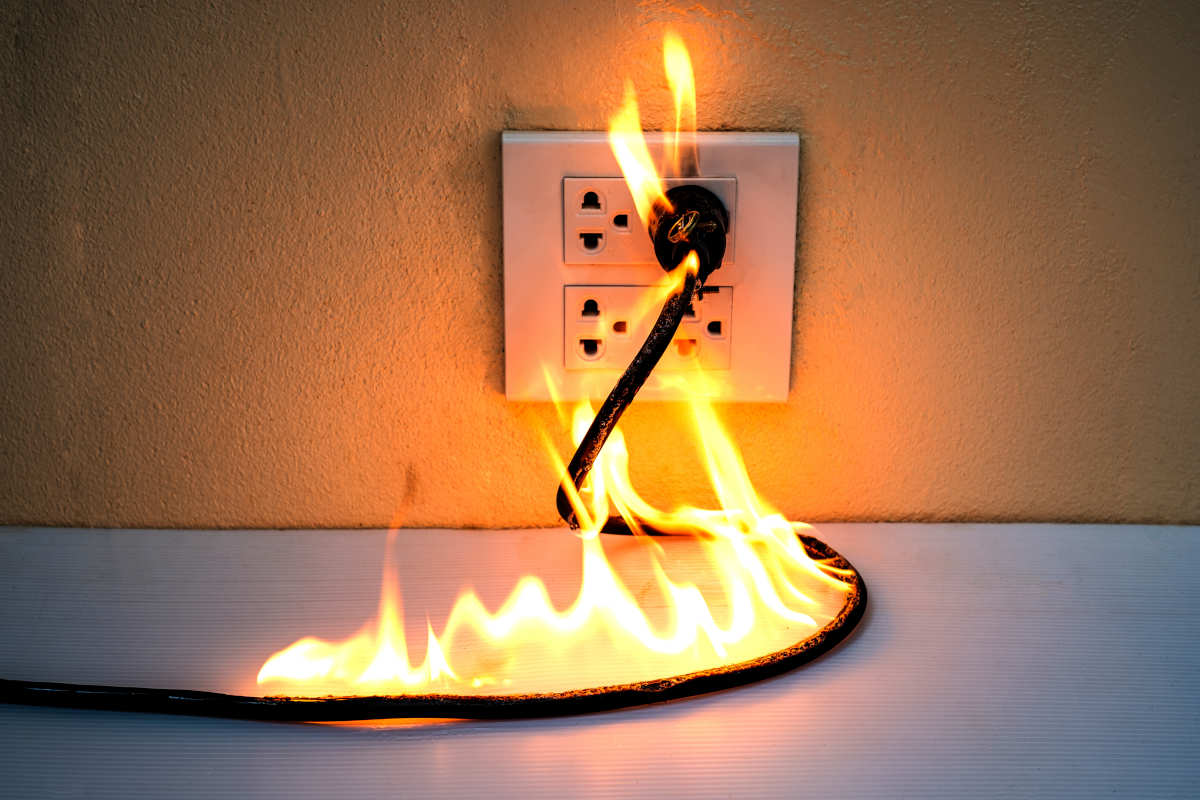
Maybe your breaker has been tripping more often than usual, or an outlet feels warmer than it should. When something about your home’s electrical system feels off, you should trust that instinct. If an electrical fire starts, knowing what to do can help you respond quickly while keeping safety a priority.
U.S. fire departments responded to an estimated 46,652 home electrical fires per year between 2022 and 2024, so it’s worth having a plan. Learning how to put out an electrical fire starts with knowing when to act, when to leave and why calling 911 should come first.
What to Do Immediately
When you’re deciding what to do in an electrical fire, the order of your response matters. Start with the steps that protect you and give you a safe way out before you think about putting out the fire:
- Identify two exits and call 911: Look for two safe ways out of the room or home, and then tell the 911 dispatcher it’s an electrical fire.
- Cut the power if it’s safe to reach it: Unplug the appliance, or go to your circuit breaker to shut off power to that area if it is safe to do so. This lowers your risk of shock and can slow the spread of the fire. However, do not cut the power if the fire is between you and the panel.
- Only consider fighting the fire once those steps are done: If the fire is small and contained, you’ve already called 911, and you have a clear exit, use a Class C or ABC-rated extinguisher. If anything changes, evacuate.
Choose the Right Response to an Electrical Fire
Some materials that seem helpful in the moment may not be safe in case of an electrical fire. Before reaching for water, flour or another household item, know what can spread the fire and what to use instead.
Do you put water on an electrical fire?
Do not use water on an electrical fire while the power is on. Water is an electrical conductor and can put you at risk of electrical shock.
If you know the power is fully off and there are no nearby hazards like grease, water may be an option. Even then, a Class C or ABC-rated fire extinguisher is usually better for a small, contained fire if you can get out safely.
Can flour put out an electrical fire?
No, flour can’t put out an electrical fire. Flour is combustible, meaning it can catch fire and worsen the situation. If it gets into the air, it can burn quickly rather than smother the flames.
Can you use baking soda to put out a fire?
Baking soda can help smother flames by cutting off oxygen, but it should only be used in very limited situations, such as a very small fire after the power is reliably disconnected. A fire blanket can also help smother a small fire in a similar way.
If the fire grows, spreads or makes you feel unsure, stop and leave. Always call 911 before reaching for a household item to try to put out the fire.
Which Fire Extinguisher Should You Use?
For an energized electrical fire, you need an extinguisher that’s safe to use around live electrical equipment. The National Fire Protection Association (NFPA) classifies this as a Class C fire.
A Class C rating means the extinguisher’s agent won’t conduct electricity back toward you. Many homeowners keep ABC fire extinguishers on hand because they are rated for Class A, B and C fires, including energized electrical fires.
Each letter shows what type of fire the extinguisher can handle. An A rating covers materials like wood and paper, B covers flammable liquids like gasoline and oil, and C covers live electrical equipment, such as appliances, wiring and circuit boxes.
If you do use an extinguisher, the PASS technique keeps you moving safely:
- Pull the pin: Unlock the handle.
- Aim at the base: Target the fire’s base, not the flames.
- Squeeze the handle: Release the agent slowly and evenly.
- Sweep side to side: Continue until the fire is out.
Only take this approach if the fire is small and contained, you’ve called 911, and a clear exit is behind you. If the extinguisher empties first, leave immediately.
When to Evacuate Your Home
A handful of situations call for evacuation:
- The fire is spreading or growing.
- Smoke is filling the room.
- You can’t safely reach the circuit breaker.
- You don’t have a Class C or ABC-rated extinguisher.
- The fire appears to be burning inside a wall.
- You feel any doubt about your safety.
A fire behind a wall needs extra caution because it can spread out of sight before you realize what’s happening. If you notice warning signs of an electrical fire coming from a wall, don’t investigate it yourself. Leave, close doors behind you and call 911.
What to Do After the Fire Is Out
Once the fire is out, continue putting safety first. Stay outside until emergency responders give you the go-ahead — even a small fire can leave behind smoldering debris or hidden structural damage.
Leave power restoration to trained professionals, too. The fire department and a licensed electrician can determine whether it’s safe to turn the power back on and when to do so.
Before using the affected part of your electrical system again, call a licensed electrician. A fire can point to a larger issue, especially in older homes. Heat-exposed components can fail later, and wiring damage isn’t always visible. A 24/7 emergency electrician can respond quickly, assess the damage and provide the electrical repair needed to address the root cause.
Common Causes of Electrical Fires
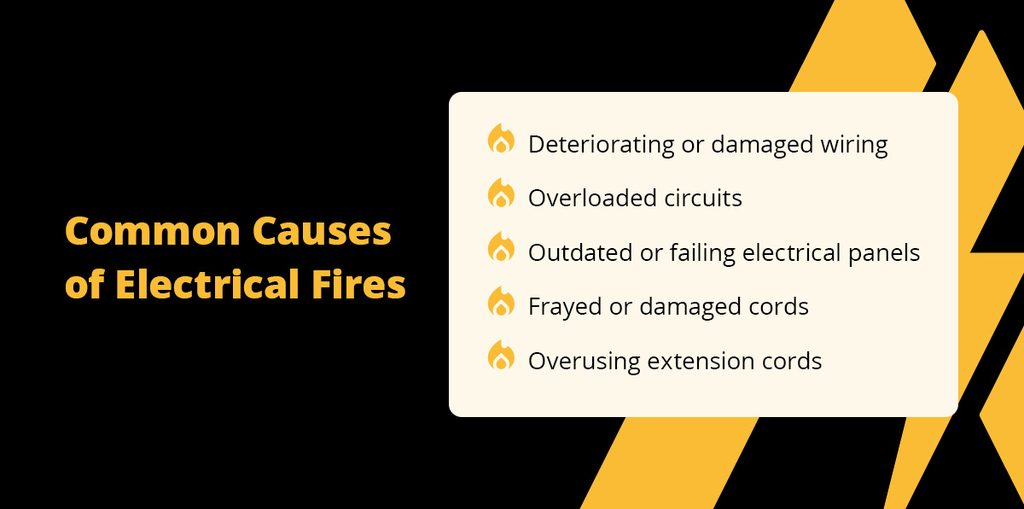
Most electrical fires trace back to one of these preventable issues, which often build up gradually:
- Deteriorating or damaged wiring: Worn insulation can cause arc faults, where electricity jumps across a gap in the wiring.
- Overloaded circuits: Too many electrical devices plugged into a circuit can create excess heat over time.
- Outdated or failing electrical panels: An aging electrical panel may struggle to meet a modern household’s demands.
- Frayed or damaged cords: Worn cords expose wiring that can spark or overheat.
- Overusing extension cords: Relying on extension cords for permanent power needs raises the risk of overheating.
Electrical failure or malfunction is a contributing factor in 77% of home electrical fires, and arcing is one common concern when wiring, cords or connections are worn or damaged.
Homes over 40 years old may be at higher risk of electrical fires when the original wiring struggles to keep up with modern appliances.
Frequently Asked Questions
Homeowners often have questions about electrical fire warning signs and next steps.
What are the warning signs of an electrical fire?
Watch for these signs, which can indicate a fire is already developing inside your walls or wiring:
– A burning or rubbery smell from an outlet, switch or wall.
– Outlet covers that feel warm, look discolored or show scorch marks.
– Sparks from an outlet.
– Crackling, sizzling or buzzing sounds from a wall or outlet.
– Lights that flicker or dim unexpectedly.
Call a licensed electrician right away if you notice any warning signs rather than waiting to see flames.
Can an electrical fire start inside a wall?
Yes. Because wiring runs throughout your wall, an electrical issue inside a wall can smolder before you notice visible smoke or flames. If wiring fails or arcs, it can ignite insulation or nearby materials inside the wall cavity.
Signs include a burning smell with no clear source, crackling sounds from the wall and warm or discolored outlet covers. If you suspect this, don’t investigate on your own. Evacuate immediately and call 911.
Do I need an electrician after a small electrical fire?
Yes, call an electrician even if the fire seemed small. Heat-exposed components can fail later without warning, and wiring damage is not always visible. An electrical inspection and repair gives a professional the chance to assess the system, fix the issue and make sure it’s safe before you use it again.
Get Help After an Electrical Fire
After an electrical fire, it’s normal to want clear answers before using your system again. Asbury Electric’s 24/7 emergency electrician team can assess the damage, confirm when it’s safe to restore power and repair the root cause.
Call us anytime at 757.767.4197, or if things feel less urgent, contact Asbury Electric online to schedule a visit. You don’t have to wait for a problem to grow before getting your electrical system checked out. We’re here to help you feel confident in your home again.